

Improving Passenger Flow in Ferry Terminals with Smart Wayfinding
by Scala Team
Improving Passenger Flow in Ferry Terminals with Smart Wayfinding
by Scala Team
And that’s where things start to slow down, not because the system isn’t working, but because people are confused, stop and miss a sign.
That’s really the problem ferry terminal wayfinding is meant to solve. When “good enough signage” isn’t actually enough anymore
Most terminals already have signage. The issue is that static signs don’t really respond to how quickly things change.
A gate shifts. A ferry is delayed. One berth suddenly gets crowded while another stays empty. And passengers don’t experience the “system” behind it, they just experience confusion, stress and wasted time.
This is where digital wayfinding solutions start to matter more. Not because they look modern, but because they can actually keep up with passenger demands and the need for real-time information.
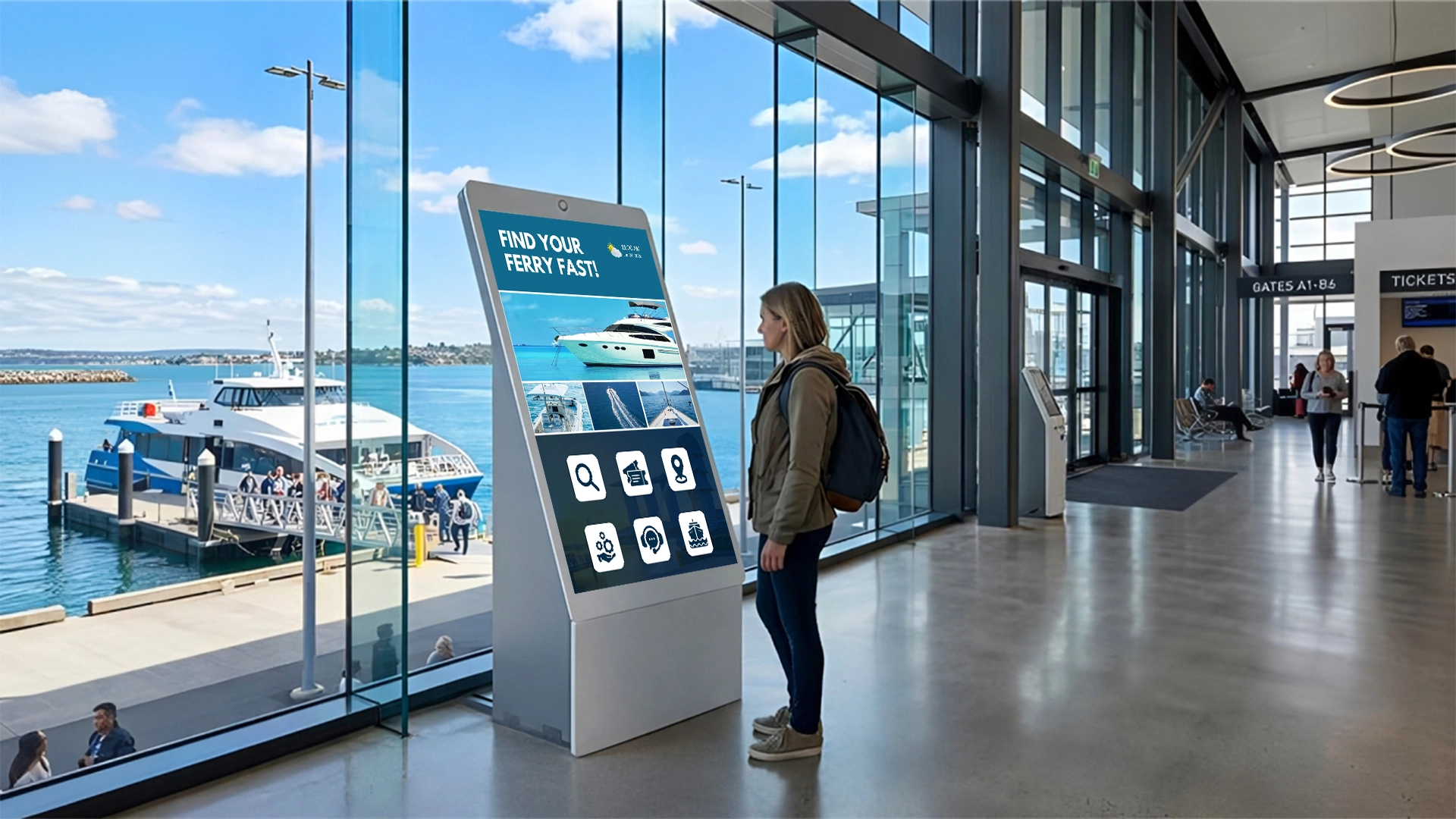
The Importance of Passenger Flow Management
Passenger flow is really about small moments of friction. If you break it down, passenger flow management in ferry terminals usually fails in specific spots:
- At entry, when people are still orienting themselves
- At ticketing or check-in, when queues start forming
- At immigration or security, where bottlenecks appear
- And again at boarding gates, especially when there are last-minute changes
Individually, these are small moments. But together, they decide whether a terminal feels smooth or stressful.
Why Digital Wayfinding Solutions Matter
The real value of digital wayfinding solutions isn’t just information, it’s control
When it’s done well, digital signage isn’t just screens showing directions. It’s a live system that helps shape movement.
- It can guide people toward less crowded areas.
- It can update boarding instructions instantly.
- It can redirect flows when things change unexpectedly.
In peak periods, that matters a lot more than most people realise. Because at scale, small delays add up fast.

What Works in Ferry Terminals
In a busy market, passengers don’t want to “figure things out.” They expect clarity immediately. So, ferry terminal wayfinding has to be:
- Simple enough to understand in seconds
- Consistent across the entire journey
- Updated in real time when things change
- Clear even in crowded, high-glare environments
If people have to stop and think, the system has already lost efficiency.
Turning Transport Digital Signage into an Operational Layer
With platforms like Scala’s transport digital signage system, terminals aren’t just displaying information; they’re managing it.
It can handle real-time boarding updates, directional guidance and passenger communication across multiple points in the terminal.
For operators, this translates to more time for other critical tasks as the transport digital signage system requires fewer manual updates, has faster responses during disruptions and can improve overall passenger flow without constant intervention.
A Better Passenger Experience
Travellers remember how easy or hard it felt to move through a terminal. When the route is obvious, the experience feels calmer, faster and more professional. When it is unclear, even a well-run terminal can feel disorganised.
That is why digital wayfinding solutions are so valuable in ferry environments, as it helps operators reduce confusion and improve the overall experience from arrival to departure.
For ferry operators who want to improve ferry terminal wayfinding and strengthen passenger flow management, Scala provides reliable digital signage for transport, built for real-world movement. Learn more at scala.com/sg
About the Author:
Scala digital signage experts share their experience and thoughts in our blog to provide practical tips and advice for real-world applications. Our team aims to offer interesting content through a variety of formats including long form articles, video logs, interviews and infographics.