
AI-Powered Digital Signage: How Smart Content Personalisation Drives Higher Engagement
by Scala Team
AI-Powered Digital Signage: How Smart Content Personalisation Drives Higher Engagement
by Scala Team
Why AI Changes The Screen Experience
The difference between traditional static signage and AI-powered digital signage is that once content is set in traditional signage, it remains the same unless someone changes it manually, whereas AI-powered digital signage offers much more flexibility. AI content personalisation for signage allows the screen to respond to weather, time of day, queue conditions and even how people interact within the space.
That may sound technical, but the result is simple. A screen becomes more useful.
A rainy afternoon can automatically trigger promotions for umbrellas or raincoats. A lunch rush can surface meal deals. A busy retail aisle can show more relevant product suggestions. A large venue can switch from general information to wayfinding help when visitors need it most.
In a busy place where pace matters and expectations are high, this kind of responsiveness makes a real difference.
What Personalisation Looks Like In Practice
AI-powered digital signage should not feel forced but feel timely. When a shopper pauses near a display, the screen can suggest something useful, or while a customer waits in line, the menu board shifts to show the right promotion at the right time.
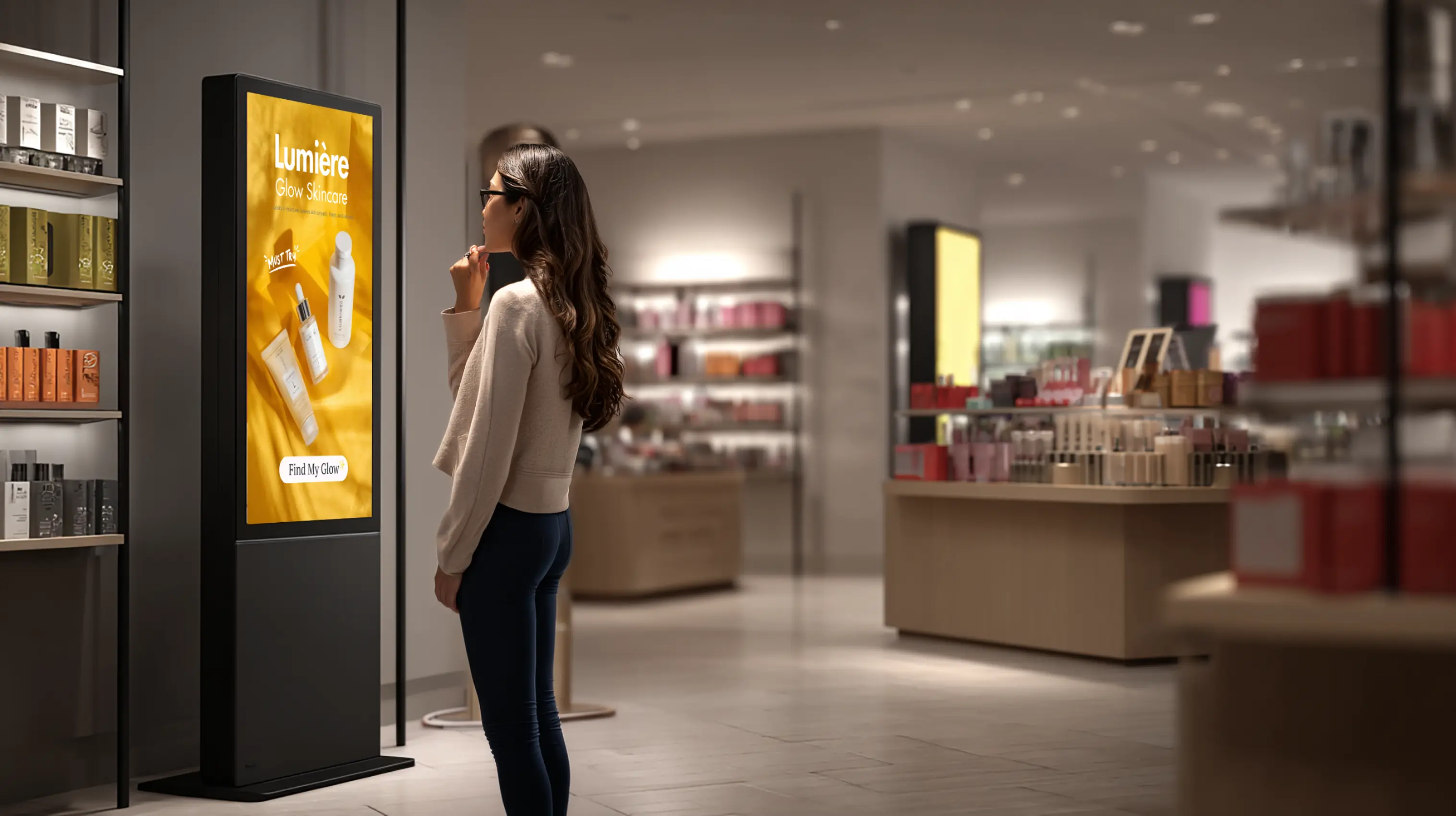
For marketers and operators, this creates a better balance between efficiency and relevance. Instead of pushing the same message all day, content can move with the environment.
Smarter Retail with AI
Retail is one of the clearest examples of where AI content personalisation for signage can really pay off. In-store screens can do much more than advertise. They can guide discovery, support upselling and help shoppers make decisions faster.
Scala’s retail-focused tools make this more practical. Digital menu boards and digital standees can display context-aware content. When the content is scheduled, it can automatically change the display based on the weather, foot traffic or product availability.
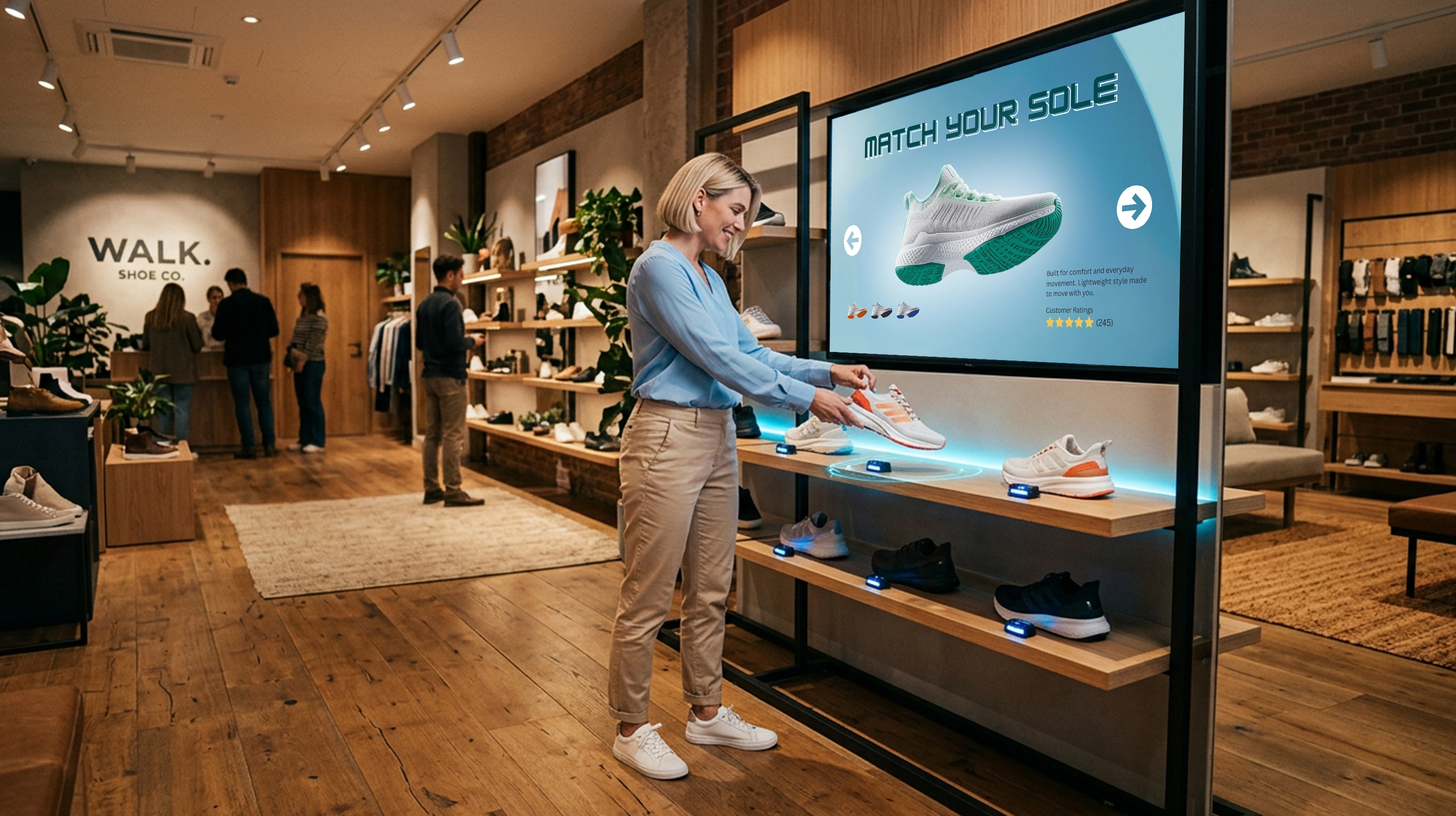
For example, Scala’s Lift-and-Learn is an interactive way to guide product discovery. Simply lifting a product from the shelf triggers the display of product information on a screen or device. Customers can lift and compare multiple items based on features, benefits and price, helping them right at the point of decision. The solution can be easily integrated with anti-theft sensors for high-value products such as electronics and high-end cosmetics.
There is also room for smarter upselling. If someone touches a product, Scala’s Touch-and-Tell can update the screen content and recommend related items or bundles based on proximity or browsing behaviour. It is subtle, but it works because the message feels helpful rather than forced.
Smart digital signage solutions are also helpful in transport hubs, hospitality, campuses and large venues. Wayfinding and virtual concierge tools can help people find their way easily with interactive maps, video calls with a customer agent and multilingual support.
Timing Matters
A lot of content fails because it is technically correct but badly timed. AI automations can help solve that. With AI-powered digital signage, the message can match the moment rather than fight it.
That could mean:
– Coffee offers in the morning.
– Lunch deals during midday traffic.
– Weather-based promotions when conditions change.
– Queue messaging during busy periods.
– Entertainment or event information for longer waits.
The Importance of Reliable Hardware
Personalisation is only useful if the system can keep running properly. That is why backend reliability matters just as much as content strategy.
If displays go down, if hardware slows, or if a kiosk stops responding, the experience falls apart very quickly. Predictive maintenance helps avoid that by monitoring device health and spotting issues before they become outages.
For Singapore businesses, that matters a lot. Screens are often in high-traffic areas where downtime is visible and disruptive. A good signage system should not only deliver smart content. It should also stay dependable enough to keep that content available all day.
What Scala brings to the table
Scala’s platform is built for this kind of environment. It combines content management, media players, analytics and integration tools so businesses can run adaptive content across multiple screen types and locations.
That includes:
– Context-aware content for digital menu boards, video walls and digital standees.
– AI-driven wayfinding and virtual concierge experiences.
– Lift-and-learn retail interactions.
– Multi-language support for diverse audiences.
– Content scheduling that can respond to time, audience and environment.
Smart digital signage solutions are more important in these situations since it helps brands do more with the screens they already have.
In places such as Singapore, the market moves quickly. Customers want quick information and relevance. AI content personalisation for signage can become a useful tool for businesses that want to stand out.
When content is more relevant, people notice it. When screens adapt to the moment, they feel more useful. And when the experience feels useful, engagement improves.
That is the real promise of AI-powered digital signage. Not just smarter screens, but better communication.
If your organisation is looking for a way to make screens more dynamic, more helpful and more effective, Scala can help you build smart digital signage solutions that are designed for the way people actually move, wait and decide. Learn more at scala.com/sg
About the Author:
Scala digital signage experts share their experience and thoughts in our blog to provide practical tips and advice for real-world applications. Our team aims to offer interesting content through a variety of formats including long form articles, video logs, interviews and infographics.