
Bio-metric in Self-Service: Unlocking Secure and Seamless Digital Kiosk Interactions
by Scala Team
Bio-metric in Self-Service: Unlocking Secure and Seamless Digital Kiosk Interactions
by Scala Team
Aside from being able to do tasks on their own, what’s changing is how people identify themselves; instead of typing passwords or handing over ID cards, more businesses are moving to biometric self-service that recognises the person standing in front of the screen.
For QSRs, banks, telcos, healthcare providers, or corporate offices, the combination of biometric kiosks, intelligent digital signage and robust media players helps deliver shorter wait times, fewer errors and stronger security without complicating the customer experience.
Why Biometrics and Self-Service Are Converging in India
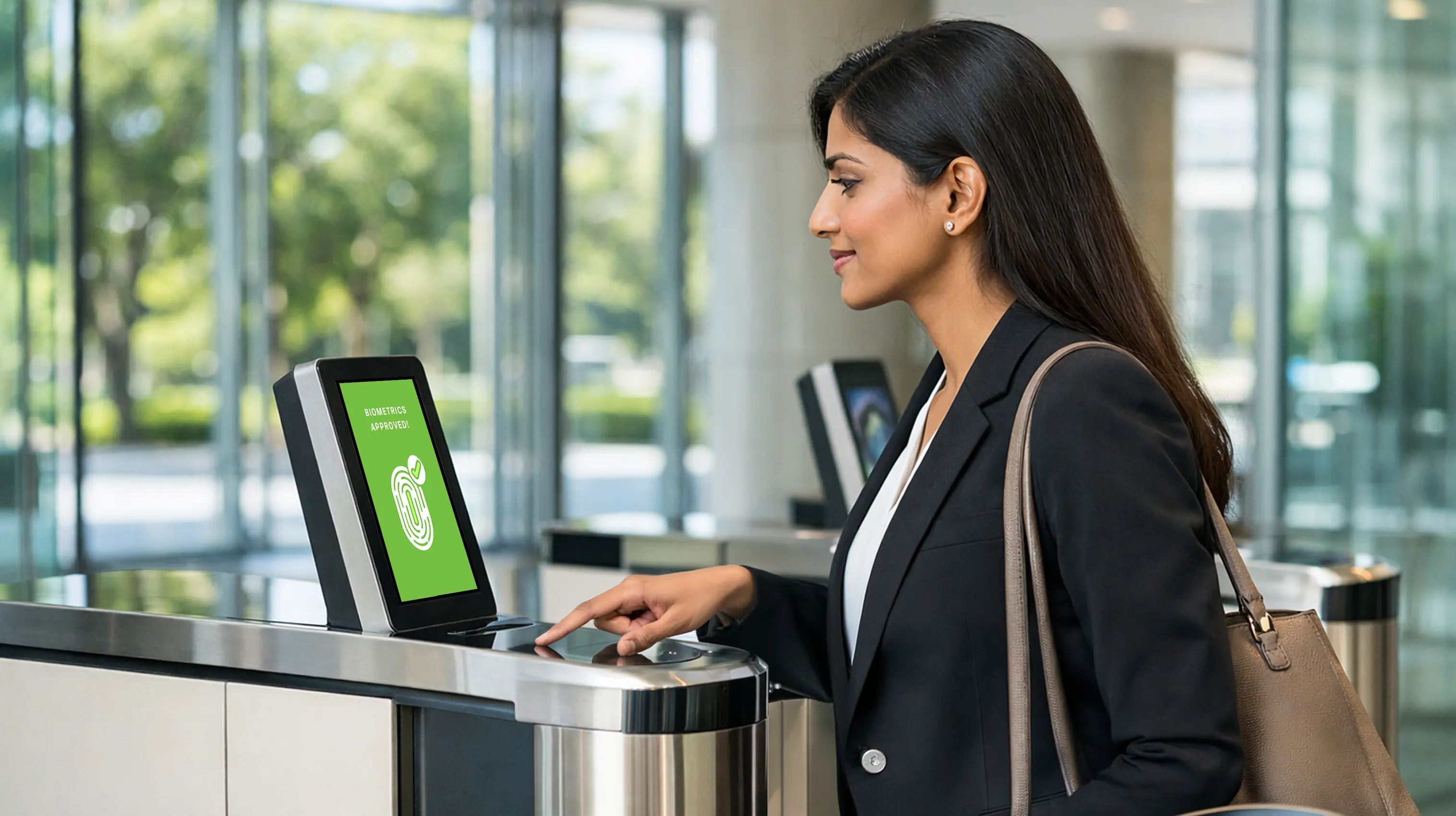
India is continuously adopting biometric enabled secure digital kiosks because of the following features:
- Everyday comfort with biometrics – Aadhaar, UPI app authentication and phone-based face/fingerprint unlock have made biometric checks feel normal. According to a study, 80% of consumers are open to using biometrics for identity verification or payments because it’s faster and more convenient.
- Reduce fraud – Organisations can cut manual checks, waiting times, and lower the risk of fraud.
- Multi-lingual support – Ensure everyone can understand the on-screen text with multilingual options.
Customers are ready, and businesses are looking for ways where they can make self-service authentication safer and easier.
How Biometric Kiosks Improve Customer Experience
When designed with care, biometric kiosks instantly change the customer experience flow from “fill this form and wait” to “confirm and go.” That shift unlocks three big advantages.
1. Faster Journeys – Biometric kiosks make it more convenient for all since users won’t need to bring physical documents or remember passwords. A face scan or other biometric check can authenticate the customer, which makes the interaction effortless.
2. Secure Authentication – Biometric kiosks require the actual face or fingerprints of a person, and this makes unauthorised access impossible.
3. Contactless experiences – Secure digital kiosks with facial recognition minimise contact with surfaces. This removes hygiene concerns and can improve customer confidence.
4. User-friendly screens – Avatar, visual clues, videos help make the biometric kiosk easier to use for everyone, even those who are not tech-savvy.
For operators, the benefits include reduced queues, fewer identity disputes, and more time for staff to focus on support.
Biometric Self-Service Challenges
Challenges in implementing biometric self-service are still present and these real-world conditions can quickly expose weak points:
- Location conditions: Poor lighting can cause matches to fail and errors to occur.
- Accessibility – Biometric kiosks need to capture faces comfortably for people of different heights, wheelchair users, and those with mobility challenges.
- Data privacy – Biometric templates, such as fingerprints or irises, must be secure and protected end to end.
- Downtime – In busy locations, biometric kiosks must authenticate large numbers of users quickly and having a reliable content management system is critical.
These are the realities businesses need to plan for when designing self-service authentication journeys to prevent any downtime and errors.
Designing a Better Biometric Kiosk Journey
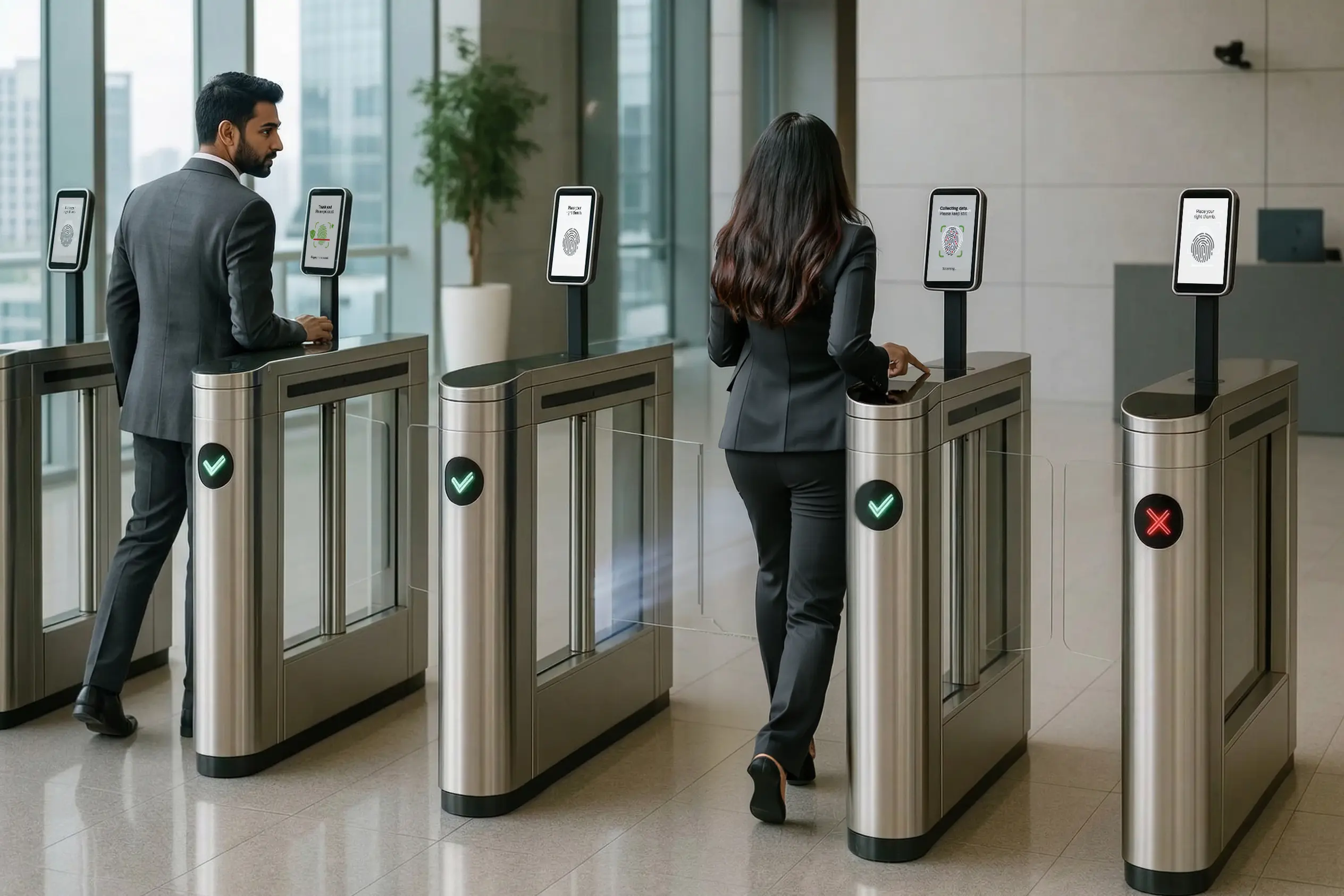
To enhance the biometric kiosk journey, here are steps businesses should take to ensure a smooth flow for all users.
- Localised digital signage – It’s important to explain the ‘why’ in the simplest terms, what’s being captured, and how data is protected.
- Hardware tuned for various conditions – Cameras and sensors should be positioned and configured for crowded environments, varying lighting, diverse demographics, and high footfall. The quality of capture is crucial for reliable self-service authentication.
- Secure image capture and matching – Pair systems that have liveness detection and encrypted communication to the back end, so every scan is both quick and safe.
- On screen guidance – Use simple, multilingual copy and visual cues to help users adjust their position and understand what’s happening, along with clear “success/failure” messages and next steps.
- Thoughtful fallback paths – If biometric matching fails, the system should offer alternatives such as OTP, card, QR code or staff assistance.
This entire journey becomes far more reassuring when it’s supported by strong content design and reliable playback.
How to Make Biometric Self-Service Work at Scale
Biometrics answer the “who”. Scala helps orchestrate everything the user sees and feels, making it manageable across hundreds of locations.
By combining Scala’s self-service kiosks with robust media players, you can turn biometric kiosks into secure, user friendly touchpoints:
- User-friendly screens – Scala’s Creative Services can help design uncluttered interfaces that walk users through self-service authentication.
- Real-time content – Digital kiosks connected with back end systems can automatically adapt content based on weather, time of day or customer status (new vs returning).
- Consistent Branding – With Scala’s central content management, content can be remotely updated across thousands of kiosks to keep every biometric self-service journey up to date.
- Optimised playback – Scala Media Players are built for 24/7 digital signage and kiosk use, ensuring biometric flows and instructional animations run smoothly.
- Analytics – Over time, self-service biometric kiosks can track completion rates, drop off points, and other key metrics to help businesses make data-driven decisions.
Use Cases for Biometric Kiosks in India
Some practical areas where biometric self-service and Scala’s ecosystem fit naturally:
- Banking and financial services – Aadhaar based identity and self-service authentication can simplify card issuance, loan servicing, and queue management.
- Airports – Can use secure digital kiosks for check in, bag drop and boarding validation.
- Healthcare – Touchless kiosk solutions can handle patient check in, bill payment, and other routine tasks, reducing wait times.
- Smart city and government services – Government offices can pair biometrics with Scala powered kiosks for bill payments, certificate requests, and more.
If you’re planning a new kiosk deployment, Scala’s team in India can help you design and deliver touchless kiosk solutions that keep security tight and journeys simple. Learn more at scala.com/in
About the Author:
Scala digital signage experts share their experience and thoughts in our blog to provide practical tips and advice for real-world applications. Our team aims to offer interesting content through a variety of formats including long form articles, video logs, interviews and infographics.