
What Is PIDS? How Passenger Information Display Systems Improve Travel Experience
by Tahir Imran
What Is PIDS? How Passenger Information Display Systems Improve Travel Experience
by Tahir Imran
As travellers worldwide continue to increase in number, how can transportation hubs improve the travel experience without compromising operational efficiency? An emerging tool that transportation hubs are relying on is the Passenger Information Display System, as it can provide dynamic, live, and accurate information on digital display boards.
In this blog, let’s explore what PIDS is, how it works, and why it’s a critical tool for efficient, connected transportation networks.
What Is a Passenger Information Display System (PIDS)?
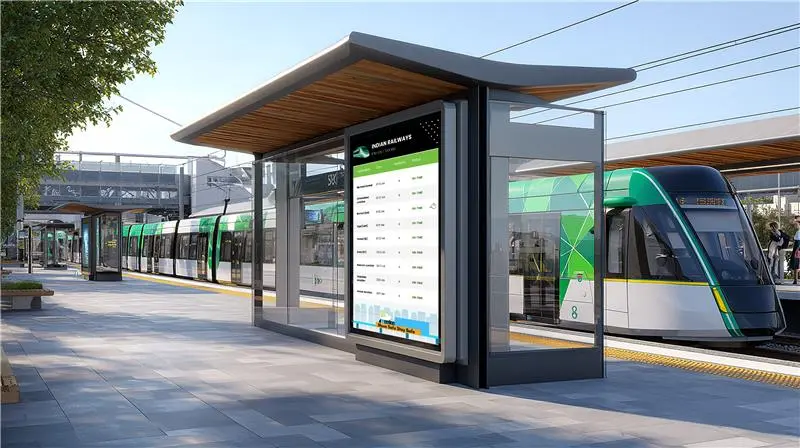
A Passenger Information Display System (PIDS) is Scala’s solution that’s designed to collect, manage, and distribute real-time travel information across transport hubs. Information from the passenger information display systems is displayed on digital display boards to show dynamic schedules, arrival and departure times, platform or gate numbers, delay notifications, and emergency announcements. Implementing the PIDS system can improve travellers’ experience by reducing congestion and enhancing operational efficiency.
PIDS for each customer touchpoint
- Entrance – Passengers can be welcomed with clear messages, train schedules, directions, or maintenance announcements.
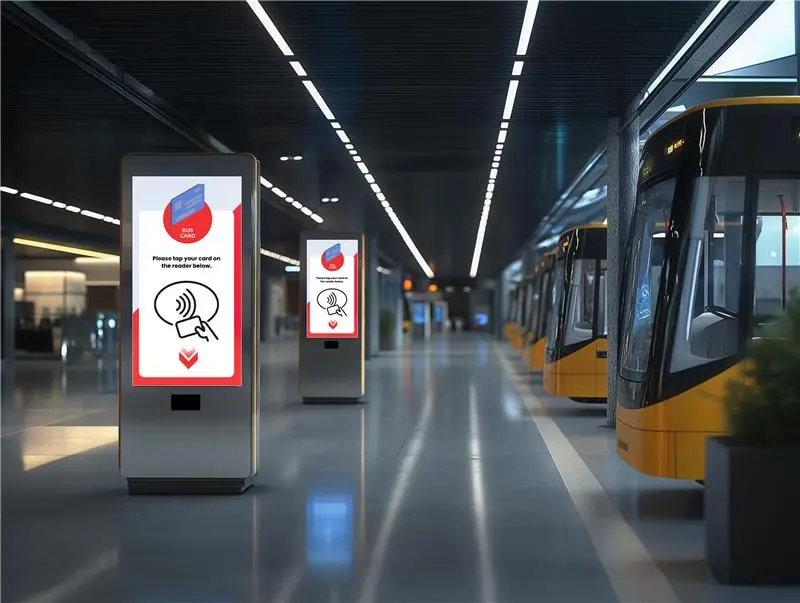
- Ticketing Area – Guide passengers with planning their journey by showing ticket prices, routes, or real-time availability.
- Wayfinder / Route Planner – PIDS can act as a digital journey guide, showing optimal routes, next stops, ETAs, and connection options.
- Concourse – Passengers can stay informed with arrivals, departures, platform directions, amenities, and promotional messages.
- Platform Level – Displays can show live arrivals, departures, boarding information, or delays.
- Waiting Lounge / Areas – While idle, passengers will stay informed of service updates, schedules, or engaging messages and promotions.
- Onboard – Show next stops, manage wait times by showing estimated arrival times, connections, alerts, and even promotional content throughout their travel time.
- Exit and Transfer Points – Display connecting lines, options for exits, ane operational or emergency messages.
Key Features of Modern PIDS for Smarter Travel
To improve the traveller experience and optimise operational efficiency, Scala’s passenger information display systems have these features:
2. Weather and News Integration – Local weather conditions and relevant news can be shown instantly to keep passengers informed beyond just scheduling data.
3. Flexible Integration – The system interfaces seamlessly with different transit management systems, allowing synchronised passenger flow management and operational coordination.
4. Emergency Management – Emergency alerts and evacuation instructions can be broadcast across all displays instantly for passenger safety.
5. Reliable 24/7 Operations – Ensure continuous uptime with stable and dependable performance.
PIDS Benefits for Transport Operators and Passengers
PIDS offers transport operators and passengers advantages through real-time travel information and delivers accurate updates on schedules, delays, and alerts, reducing uncertainty and improving schedule adherence.
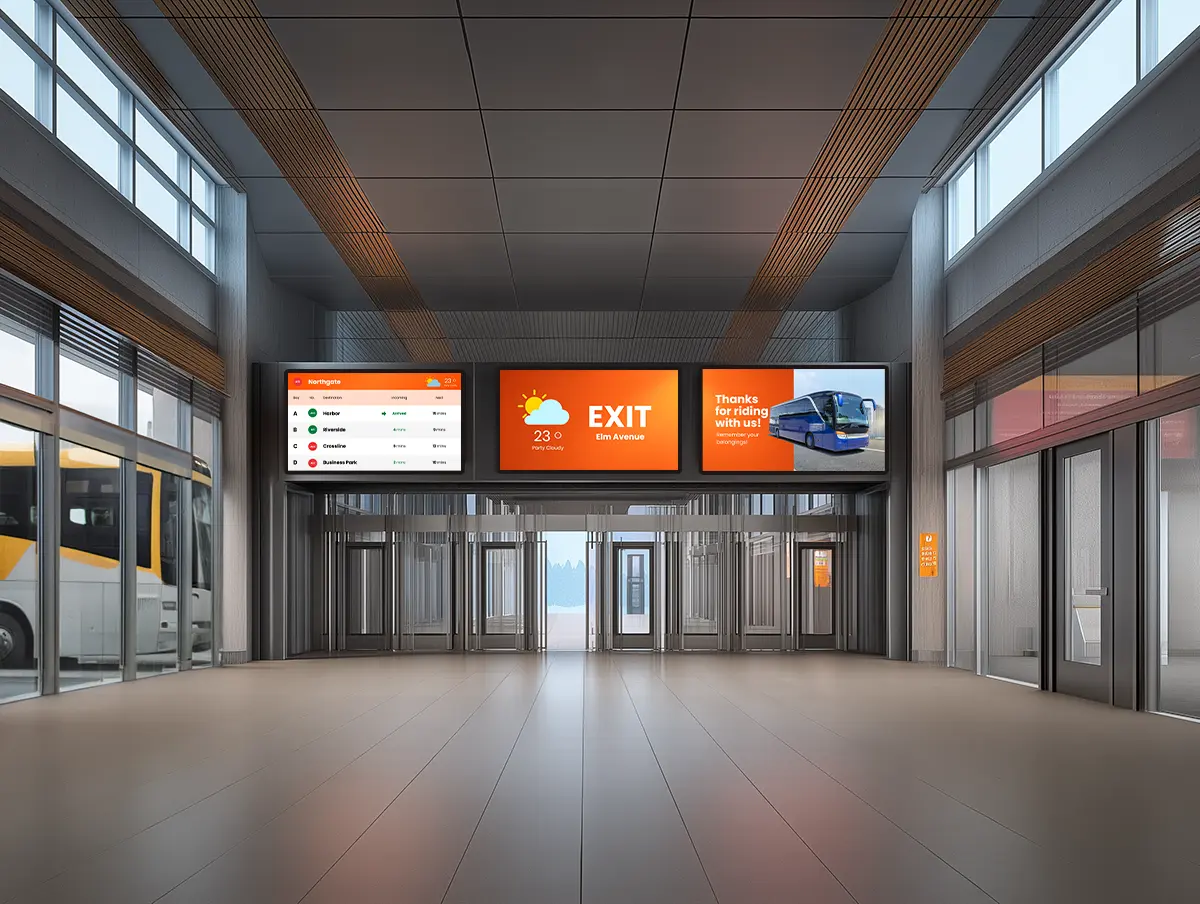
Passengers enjoy an improved experience with clear, up-to-date information that minimises frustration, waiting times, and overcrowding, all supported by Scala’s passenger information display system and its 24/7 reliability, designed to withstand high-traffic stresses in large hubs.
Aside from these benefits, transport operators can also receive detailed analytics to support data-driven decision-making for continuous improvement.
How Does PIDS Work?
Scala’s system collects operational data from various transport control systems and processes it through a centralised Content Management System (CMS). This CMS optimises and customises the output content for different screen locations and languages, distributing data to digital signage in real time. Emergency messages can override standard displays immediately, ensuring swift communication. The system’s open APIs allow enhancements and integrations with external services, making it adaptable and scalable for future needs.
For modern, connected transport hubs in India, Scala’s Passenger Information Display System is a communication platform that’s built to move with your passengers, scale easily with your network, and grow with your city. To learn more about PIDS, visit scala.com/in/.
Frequently Asked Questions
1. What types of information are typically displayed on PIDS?
Schedules, platform/gate assignments, delays, cancellations, safety alerts, local weather, and service announcements.
2. How does PIDS ensure real-time accuracy?
Through continuous data feeds from transit control and signalling systems, synchronised with the CMS and automatically pushed to displays.
3. Can Scala’s PIDS support screens in different locations?
Yes, Scala’s reliable CMS can allow transport operators to update or schedule content for screens across multiple locations.
4. How quickly can emergency alerts be broadcast through PIDS?
Emergency messages can override normal content on all screens within seconds and are complemented with audio announcements.
About the Author:
Tahir Imran is Assistant Vice President, Research and Development, responsible for leading and managing the research and development efforts of STRATACACHE/ Scala in Asia-Pacific. With a background in science and engineering, he has extensive experience in research, product development, and project management. He works closely with teams across the organisation from marketing to operations and sales, to develop and implement strategies for new product development, as well as improve existing products. He stays up-to-date on industry trends and emerging technologies, leveraging this knowledge to drive innovation and maintain a competitive edge in the marketplace.