
Inside the Next-Gen QSR Experience: Self-Service Kiosks at Drive-Thru, Mobile, and Self-Service Kiosks
by Scala Team
Inside the Next-Gen QSR Experience: Self-Service Kiosks at Drive-Thru, Mobile, and Self-Service Kiosks
by Scala Team
The quick-service restaurant experience is continually transforming in Australia to meet customers’ demand for quick, stress-free dining. Based on a study, QSRs are worth AUD 29 billion and are expected to triple to AUD 70 billion by 2034.
The Digital Era of Fast Food in Australia
Fast-food technology gives restaurants an advantage as seamless experiences can attract more customers by offering faster, smarter, and more personal service. From intelligent menu boards that adapt in real time to predictive ordering that learns from customer preferences, this is now the era of a connected restaurant.
The next-gen experiences in QSR are already here, and in this blog, let’s explore AI-driven drive-thrus, mobile ordering solutions, fast-food technology, and self-service kiosks.
In-Store Self-Service Kiosk For Smarter Operations
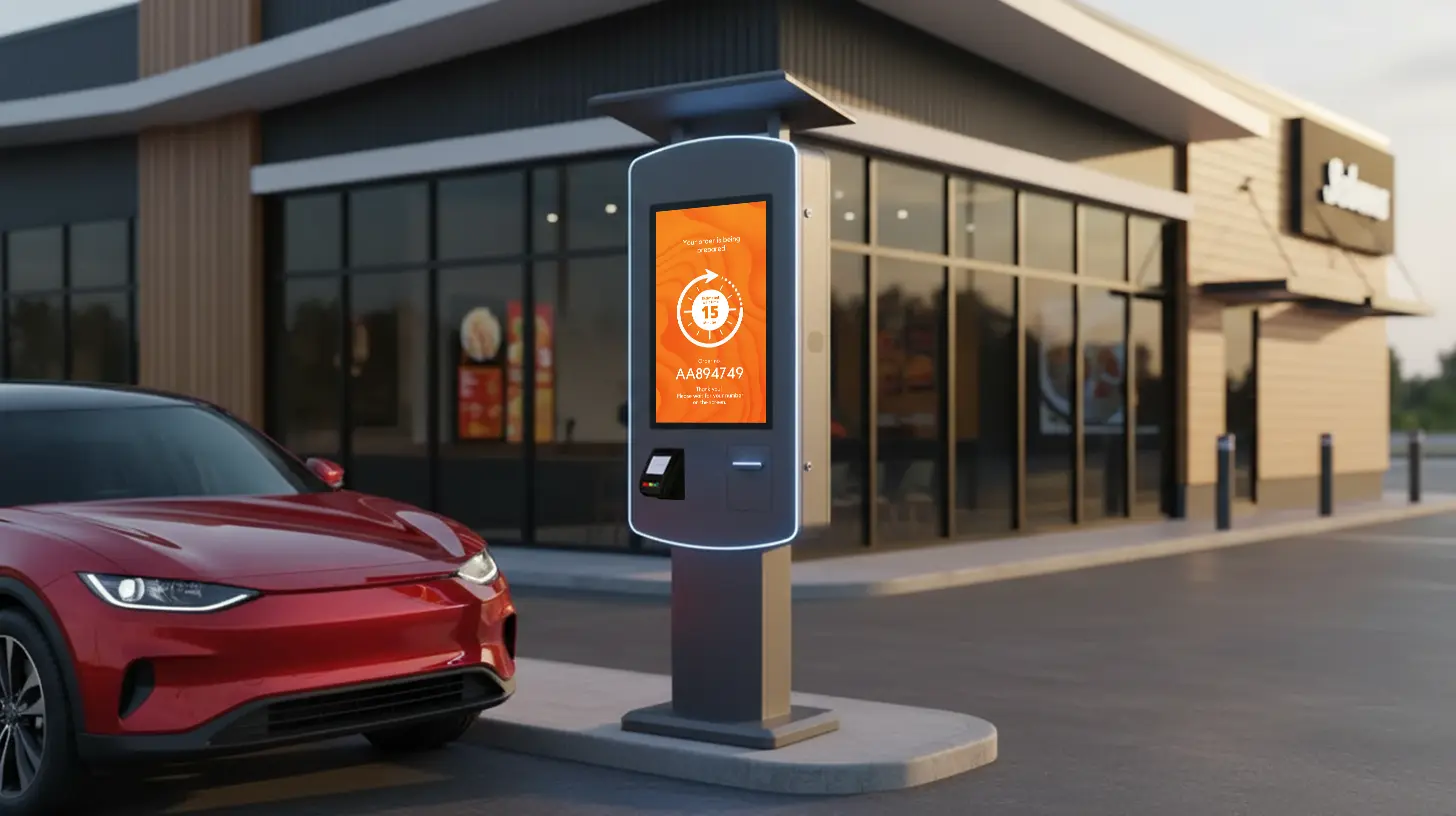
While everyone is in a rush to get things done quickly, entering a modern QSR with long lines is a red flag to consumers; they tend to leave and turn to a competitor to get their food quickly. According to a report, 76% of guests choose to order through a self-service kiosk since it allows them to browse menus, customise orders, pay independently and without waiting.
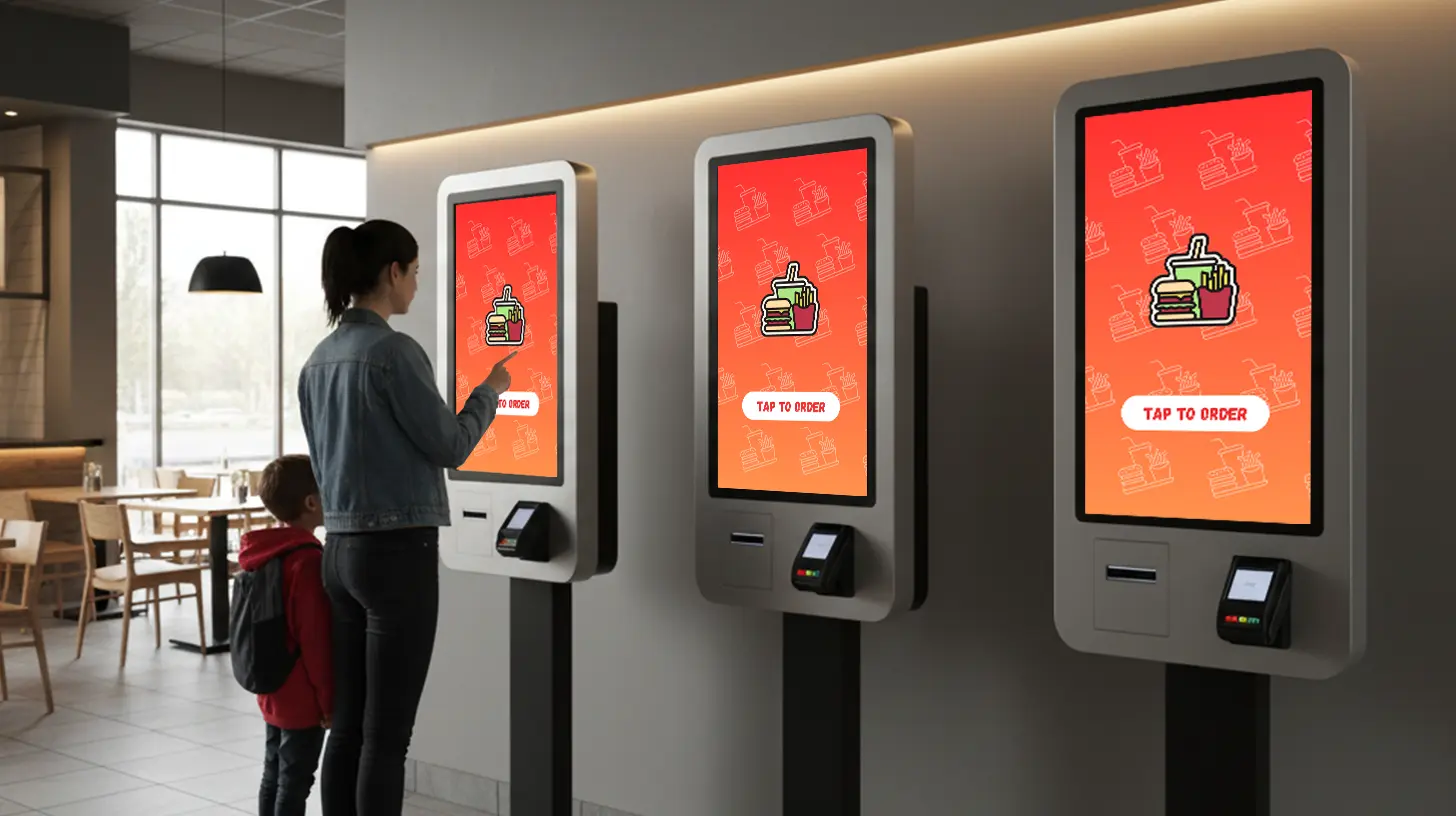
Self-service kiosks can also improve kitchen accuracy by sending orders directly to the kitchen team for immediate visibility and by increasing sales with on-screen recommendations.
Aside from creating upselling prompts, the self-service kiosk can guide customers through combos and upgrades.
Drive-Thru for Better Service
When driving into a QSR, the digital displays can be automatically updated based on the weather or time of day, allowing customers to place orders independently and handle routine tasks like order-taking. This frees staff to focus on improving customer service for a more positive experience.
Mobile Ordering Solutions For Convenience in Every Hand
The mobile food ordering space will also continue to grow, and to optimise this, QSRs should integrate a content management system that supports mobile-first approaches. This can enable exclusive offers, birthday rewards, menus, and loyalty programs that are displayed on apps and websites.
Real-Time Personalisation
At the core of modern QSR experiences is the demand for data-driven personalisation, which enables predictive analytics, tailored recommendations, and menu visuals based on historical purchases, time, or even local events.
Imagine a digital display promoting smoothies by the beach during the summer or hot wraps during cold mornings. Displaying context-aware content can improve engagement and drive sales. This level of personalisation is becoming the competitive advantage in Australia’s dynamic QSR landscape.
Integrated Fast Food Technology: The Connected Store of the Future
QSRs in Australia that embrace fast-food technology and use Scala’s all-in-one content management ecosystem help tie together self-service kiosks, mobile ordering solutions, and QSR digital signage into a unified workflow.
Integrating digital menu boards that display real-time product information with kitchen order management systems enables quick order creation, improving customer satisfaction and operational efficiency. QSRs that are able to connect each interaction from ordering to pick up help maintain speed and quality across locations.
The Future Is Digital, and It’s Here in Australia
Brands that invest in customer-first solutions, such as self-service kiosks, mobile ordering, and QSR digital signage, can redefine how everyone enjoys fast-food experiences.
Learn more about QSR innovation solutions, visit scala.com/au
About the Author:
Scala digital signage experts share their experience and thoughts in our blog to provide practical tips and advice for real-world applications. Our team aims to offer interesting content through a variety of formats including long form articles, video logs, interviews and infographics.